All about
Connected TV Advertising
Get the scoop on how local CTV/ OTT campaigns drive brand awareness with better returns for brands of all sizes.
Why advertise on connected TV?
According to eMarketer, nearly 75% of the U.S. population now streams TV shows and movies over internet-connected devices. CTV advertising engages your buyers where they are and uses your advertising budgets much more effectively.
CTV advertising benefits
CTV offers the best of two worlds: the reach and branding power of linear TV with the precise targeting and measurement capabilities of digital advertising.

Better targeting
Precise, data-driven audience targeting based on interest, demographics, and viewing habits eliminates the waste of traditional linear TV buys.

Better measurability
Metrics like impressions delivered, completed video views, households reached, and viewer frequency improve decision-making while campaigns are in flight.

Better frequency management
You can manage frequency in a centralized fashion across all placements—preventing wasted impressions.

Comparable scale
Nearly 75% of the U.S. population is watching CTV. Only 53.3 million U.S. households will subscribe to a traditional pay TV service.

Lower cost of entry
Linear TV advertising can be expensive, but CTV makes it possible to run highly targeted, local campaigns at much lower cost.

Interactivity
On some platforms, viewers can click through ads to get more information or make a purchase.
Key CTV facts
- There are about 250 million CTV viewers in the U.S. (Source: eMarketer)
- More than 100 million U.S. viewers use free, ad-supported platforms, compared to 53.3 million households that subscribe to a traditional pay TV service (Source: eMarketer)
- CTV ad spending is projected to reach $46.89 billion by 2028 (eMarketer)
- CTV ads are non-skippable and are typically 15 or 30 seconds in length
- It’s possible to run ads as long as 120 seconds
- CTV ads can appear in full-length TV shows, movies, news, live sports, and events
CTV audience targeting opportunities
- Geography
- Demograhic
- Behaviors, including website visits
- Interests, including political leanings
- Purchase history
- First-party data for look-alike modeling and suppression
Key CTV facts
- There are about 250 million CTV viewers in the U.S. (Source: eMarketer)
- More than 100 million U.S. viewers use free, ad-supported platforms, compared to 53.3 million households that subscribe to a traditional pay TV service (Source: eMarketer)
- CTV ad spending is projected to reach $46.89 billion by 2028 (eMarketer)
- CTV ads are non-skippable and are typically 15 or 30 seconds in length
- It’s possible to run ads as long as 120 seconds
- CTV ads can appear in full-length TV shows, movies, news, live sports, and events
CTV audience targeting opportunities
- Geography
- Demograhic
- Behaviors, including website visits
- Interests, including political leanings
- Purchase history
- First-party data for look-alike modeling and suppression
Frequently asked questions about connected TV advertising
Connected TV (CTV) is the delivery of digital video to televisions via internet-connected streaming devices (like Roku, Fire, Apple TV, Chromecast or gaming consoles) or internet-connected Smart TVs. Audiences watching ad-supported programming represent almost half of these viewers and are growing steadily as more free and low-cost subscriptions have become available.
OTT is an alternative term that stands for “over-the-top” and refers to streaming video content that is provided over the internet and bypasses traditional distribution of a cable set-top box. While CTV and OTT don’t mean exactly the same thing, there is enough overlap to use the terms interchangeably.
CTV advertising refers to digitally sold ads that appear on TV screens, including ads shown on streaming devices (like Roku, Fire, Apple TV, Chromecast, or gaming consoles) or internet-connected Smart TVs.
CTV ads are very similar to traditional TV ads. Non-skippable ads, typically 15 or 30 seconds in length (and up to 120 seconds), appear during content breaks. The viewer must watch ads before continuing with the content. As with linear TV, CTV ads are very effective at creating advertiser brand awareness.
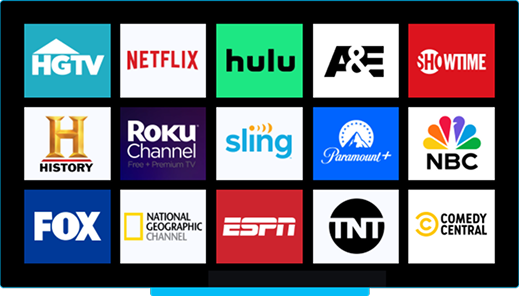
Advertisers can purchase CTV advertising directly from publishers, which include broadcasters such as NBC or A&E, streaming services such as Amazon Video or Hulu, or TV or device manufacturers such as Apple, Roku, or Samsung, just like they do with linear TV. There are typically minimum spending requirements for direct buys. In addition, CTV advertising can be purchased programmatically through public and private marketplaces.
CTV ads mainly appear on regular TV screens. Since we want to reach streaming TV audiences wherever they are, advertisers can place streaming ads on mobile phones, tablets, and laptops too. Today, less than 15% of viewers watch TV shows and full-length movies on these other devices. With JamLoop, you can choose to block smaller screens if you prefer when you set up campaigns.
A demand side platform (DSP) is software designed for advertisers and agencies to manage their programmatic ad campaigns from a centralized platform. The ads are bought using data-driven techniques via a real-time auction between buyers (advertisers/ agencies) and sellers (publishers/ content owners). In CTV, the sellers of ad inventory are streaming app publishers, like Hulu, Disney+, FOX Sports, Samsung TV Plus.
Buying directly from individual publishers has significant limitations, especially if you’re not a very large brand. First, each publisher has limited scale. For example, Hulu only reaches 16% of U.S. audiences. Second, you cannot manage reach and frequency holistically across multiple publishers when each campaign is set up and managed separately. Third, it’s a lot of work to aggregate reports from each publisher into a single report, making it harder to quickly optimize across all publishers. Finally, there are usually minimum spending requirements.
The benefit of working with a CTV DSP like JamLoop are:
- Access to many streaming app publishers in one place
- Centralized control over your ads’ reach and frequency
- Real-time reporting across all publishers at the same time.
With centralized insight and management, you can optimize campaigns more effectively and more holistically, leading to better results at greater scale.
CTV provides for multiple targeting methods: by geography, by demographic, by behaviors & interests, purchase history, political leanings, and more. Targeting in CTV uses IP addresses and device IDs to target at the household level rather than relying on third-party cookies.
Different CTV ad vendors may offer different capabilities with respect to geo-targeting, audience segmentation, and first-party data onboarding.
Because CTV allows you to target viewers very precisely, it’s actually a lot more cost-effective than linear TV since you’re not wasting ad dollars on viewers who are not likely customers. Also, JamLoop allows you to try CTV advertising at any spending level. We don’t require a minimum spend or long-term contract.
CTV is the fastest-growing digital advertising segment, so it makes sense that vendors want to fill this need. CTV is now a “must-buy” for brands, surpassing all other video ad formats including social video. However, not all vendors focus on CTV the way JamLoop does. It’s worth shopping around and understanding the tech and relationships beneath every offering.
Where premium TV meets real performance data
Discover the impact of CTV in your media mix.
It's easy to get started
Tell us what you want to achieve. We’ll build a plan designed to drive real business impact.